
Rendable 3D
使用 AI 生成 3D 模型。
Rendable 3D: Revolutionizing 3D Model Creation with AI
In the rapidly evolving landscape of creative technology, few innovations have been as transformative as AI-powered 3D model generation. Enter Rendable 3D, a cutting-edge platform that's democratizing access to professional-quality 3D modeling through the power of artificial intelligence. Whether you're a game developer, industrial designer, architect, or digital artist, Rendable 3D is changing how we think about bringing three-dimensional visions to life.
The Power of AI-Driven 3D Creation
Rendable 3D stands out in the crowded field of AI tools by focusing specifically on 3D model generation. The platform leverages advanced machine learning algorithms to understand and interpret various input types—ranging from simple text descriptions to 2D images—and transform them into fully realized 3D models. This capability addresses one of the most significant bottlenecks in 3D content creation: the time and expertise required to model complex objects from scratch.
Key Features and Capabilities
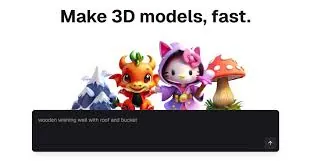
Text to 3D: Perhaps the most impressive feature of Rendable 3D is its text-to-3D generation capability. Users can simply describe what they want in plain language—a futuristic vehicle, a fantasy character, or a piece of furniture—and the AI interprets these descriptions to create corresponding 3D models. This natural language approach makes 3D creation accessible to anyone with an idea, regardless of their technical modeling skills.
Image to 3D: For those who have reference images or concept art, Rendable 3D's image-to-3D feature is a game-changer. Upload a single 2D image, and the platform analyzes it to understand geometry, form, and spatial relationships, then generates a 3D representation. This is particularly valuable for designers who work extensively with concept sketches or need to quickly prototype products based on existing imagery.
Multi-Image to 3D: Taking things a step further, the multi-image capability allows users to upload several views of an object, enabling the AI to create more accurate and detailed 3D models. This approach is especially useful when you have orthographic projections or multiple reference angles that together provide comprehensive information about the object's geometry.
Texture Generation: Beyond geometry, Rendable 3D understands that great 3D models need great textures. The platform's texture generation capabilities ensure that the resulting models aren't just blank surfaces but feature realistic materials, colors, and surface details that bring them to life.
Use Cases and Benefits
Game Development and Entertainment
For game developers, Rendable 3D offers unprecedented speed in asset creation. Indie developers and small studios can now prototype game environments and characters in hours rather than weeks. The ability to quickly iterate on concepts by simply modifying text descriptions or adjusting input images accelerates the creative process significantly. This rapid prototyping capability is especially valuable in the early stages of game design, where exploring multiple ideas quickly can make or break a project.
Industrial Design and Product Development
Product designers can use Rendable 3D to generate initial concepts based on written briefs or rough sketches. The tool excels at creating foundational models that can then be refined and detailed by professional designers. This workflow saves countless hours on basic modeling tasks, allowing designers to focus on perfecting details and functionality rather than building from scratch.
Architecture and Visualization
Architects and interior designers can leverage Rendable 3D to quickly generate furniture models, decorative elements, and architectural details. The image-to-3D feature is particularly useful for converting hand-drawn sketches or mood boards into 3D objects that can be placed in architectural visualizations, helping clients better understand design concepts.
Digital Art and Animation
Digital artists and animators benefit from the platform's ability to generate characters, props, and environmental elements. The multi-image feature is especially valuable for creating consistent character models from various reference angles, ensuring proper proportions and details from different viewing perspectives.
How Rendable 3D Compares to Similar Tools
The landscape of AI 3D generation is still emerging, with several players entering the space. Rendable 3D distinguishes itself through several key advantages:
Comprehensive Input Support: Unlike some competitors that focus exclusively on text-to-3D or image-to-3D, Rendable 3D supports multiple input methods within a single platform. This flexibility allows users to choose the approach that best fits their workflow and available materials.
Quality and Consistency: Early users report that Rendable 3D produces models with consistent quality and fewer artifacts than many competing tools. The AI appears to handle complex geometries and organic shapes particularly well, addressing one of the perennial challenges in AI 3D generation.
User-Friendly Interface: The platform's straightforward interface makes it accessible to beginners while offering the depth that professionals need. The learning curve is relatively shallow compared to more technical 3D software, making it easier to integrate into existing workflows.
Commercial-Ready Output: Rendable 3D's models are designed with commercial applications in mind, producing outputs that are ready for use in professional projects with minimal post-processing required.
Pricing Model
Rendable 3D operates on a flexible credit-based pricing system that scales with different user needs:
- Hobby Plan ($5): Approximately 600 credits for roughly 20 assets, perfect for casual users and those experimenting with the technology.
- Starter Plan ($20): About 3,000 credits for around 100 assets, suitable for independent creators and small projects.
- Professional Plan ($45): Roughly 7,500 credits for approximately 250 assets, designed for professional use cases and higher-volume production.
All tiers include commercial use rights and dedicated support, making Rendable 3D viable for both personal and professional projects.
The Technology Behind Rendable 3D
While the specifics of Rendable 3D's underlying architecture are proprietary, the platform likely employs a combination of deep learning techniques common in state-of-the-art 3D generation. These typically include:
- Diffusion Models: Popularized by image generation tools, diffusion models have shown promise in 3D generation by learning to denoise 3D representations from random noise.
- Neural Radiance Fields (NeRFs): Originally developed for novel view synthesis, NeRF-based approaches can reconstruct 3D scenes from 2D images, making them ideal for image-to-3D applications.
- Transformer Architecture: The text understanding capabilities likely leverage transformer-based language models to interpret natural language descriptions and translate them into 3D concepts.
The integration of these technologies represents a significant achievement in making complex AI systems practical for everyday creative work.
Getting Started with Rendable 3D
For those new to AI-powered 3D creation, Rendable 3D offers an accessible entry point. The workflow is intuitive:
- Choose your input method (text, single image, or multiple images)
- Provide your prompt or upload your reference material
- Let the AI generate your 3D model
- Review and refine as needed
- Export your model for use in your preferred 3D software or application
The platform's learning resources and dedicated support ensure that users can quickly become productive, regardless of their prior experience with 3D modeling or AI tools.
The Future of AI 3D Generation
Rendable 3D represents more than just a convenient tool—it's a glimpse into the future of creative technology. As AI models continue to improve, we can expect to see even greater accuracy, faster generation times, and more sophisticated understanding of spatial relationships. The platform's current capabilities are impressive, but they're likely just the beginning of what's possible.
For creators and businesses looking to stay competitive in an increasingly digital world, embracing tools like Rendable 3D isn't just about saving time—it's about expanding creative possibilities and unlocking new ways to bring ideas to life.
Conclusion
Rendable 3D stands as a powerful example of how artificial intelligence can enhance rather than replace human creativity. By automating the technical aspects of 3D modeling, it frees creators to focus on what matters most: the vision and artistry that make their projects unique.
Whether you're a seasoned 3D professional looking to accelerate your workflow, a developer building the next indie game hit, or someone with a creative vision but limited modeling experience, Rendable 3D offers a compelling solution that's worth exploring. With its combination of multiple input methods, reasonable pricing, and commercial-ready output, it's positioned to become an essential tool in the modern creative toolkit.
The barrier to creating high-quality 3D content has never been lower, and tools like Rendable 3D are leading the charge in making professional-grade 3D creation accessible to everyone. If you haven't yet explored AI-powered 3D generation, there's never been a better time to start—and Rendable 3D is an excellent place to begin your journey.