
QuiverAI
QuiverAI 帮助团队为产品、品牌和营销工作流程生成、编辑和制作可编辑的 SVG 资产动画。
QuiverAI: Revolutionizing Vector Design with AI-Powered SVG Generation
In the rapidly evolving landscape of AI-powered creative tools, QuiverAI emerges as a game-changer for designers and teams who need precise, editable vector graphics. Unlike traditional AI image generators that produce rasterized pixel-based outputs, QuiverAI takes a fundamentally different approach by treating visual design as a coding problem—generating clean, production-ready SVGs that can be edited, refined, and integrated seamlessly into professional design workflows.
The Core Philosophy: Visual Code Generation
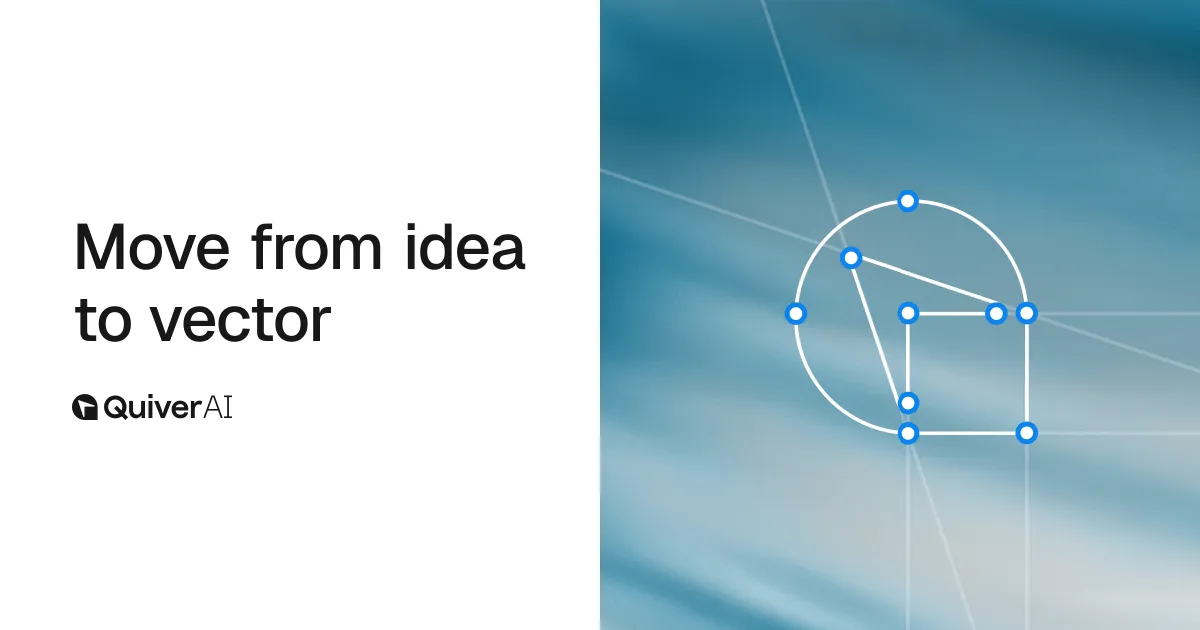
QuiverAI is built on a powerful premise: vectors are code, and large language models excel at generating code. By treating visuals as structured, editable programs rather than collections of pixels, QuiverAI enables unprecedented control and precision in AI-generated graphics. This paradigm shift—what they call "visual code generation"—means designers can generate, edit, refine, and control designs with the same level of precision expected from software development.
The company, founded by researchers who pioneered work like StarVector and RLRF, combines deep research expertise with practical design experience. Having raised $8.3M in seed funding led by a16z, with backing from industry leaders including Linda Tong (Webflow CEO), Amjad Masad (Replit CEO), and Michele Catasta (Replit's Head of AI), QuiverAI is well-positioned to transform how teams approach vector design.
Key Features and Capabilities
Arrow 1.0 Model At the heart of QuiverAI is Arrow 1.0, a native vector AI model currently in public beta. This multimodal model generates SVGs from both images and text, allowing users to perform edits and refinements using natural language. Arrow 1.0 excels at producing SVGs that are clean and precise, with minimal control points and fewer artifacts—making it ideal for icons, fonts, and typography where precision matters most.
Text to SVG Designers can describe their vision in plain language, and QuiverAI generates vector graphics that match the description. This feature supports streaming for real-time progressive rendering, letting users see their creations take shape as they're generated.
Image to SVG Convert raster images (PNG, JPEG, WebP) into clean, editable SVG graphics. This is particularly valuable for teams needing to scale or modify existing imagery while maintaining quality and editability.
API Integration For developers and teams building custom workflows, QuiverAI offers a robust API that can be integrated directly into applications. The API includes endpoints for text-to-SVG, image-to-SVG generation, with SVG editing and animation capabilities coming soon. This makes it easy to incorporate AI-powered vector generation into existing design systems, CMS workflows, or custom creative tools.
Dual Access Points Users can access QuiverAI through the intuitive web application at app.quiver.ai, perfect for experimentation and quick creation, or leverage the API for deeper integration into automated workflows and custom tools.
Use Cases and Benefits
Logo Design and Brand Identity QuiverAI shines in logo creation, generating clean, production-ready vector logos from text descriptions or reference images. This enables rapid exploration of design concepts without sacrificing the quality and precision required for professional brand identity work. Designers can iterate quickly, test multiple directions, and maintain full editability throughout the process.
Typography and Custom Fonts While still in development, QuiverAI's typography capabilities promise to revolutionize custom font creation. The tool helps generate vector letterforms and fonts, from experimental display types to functional UI typography, with precise control over weight, contrast, and character details.
Illustrations and Marketing Materials Marketing teams can generate fully vector illustrations for campaigns, social media, or product flows, with the ability to edit colors, adjust compositions, and maintain consistent brand aesthetics across all touchpoints. The scalability of SVG means these assets work equally well for UI components, marketing collateral, or large-format displays.
Technical Drawing and Industrial Design QuiverAI is particularly strong for technical drawings, from floorplans and diagrams to fashion and industrial designs where structure and editability are crucial. The model produces well-structured, layered outputs even when elements overlap, significantly reducing the manual cleanup typically required with other AI generation tools.
Animation (Coming Soon) The upcoming animation capabilities will enable designers to bring SVGs to life without turning design into engineering. QuiverAI will animate vectors directly—logos, icons, illustrations—keeping them lightweight and controllable through CSS animations based on motion prompts.
How QuiverAI Compares to Similar Tools
Most AI image generators, including tools like Midjourney, DALL-E, and Stable Diffusion, treat visuals as pixels. While impressive for artistic exploration, these outputs are fundamentally difficult to edit precisely and don't integrate well into professional design workflows requiring scalable, editable graphics.
QuiverAI distinguishes itself in several key ways:
Editability and Precision Every output from QuiverAI is a fully editable SVG with structured layers and control points. Unlike raster images from other AI tools, QuiverAI outputs can be modified with standard design software, colors can be changed, shapes can be adjusted, and compositions can be refined without degradation.
Workflow Integration SVG is the backbone of modern visual creation—used by designers, front-end developers, print professionals, architects, fashion designers, and manufacturers. QuiverAI speaks this language natively, making outputs immediately useful across diverse professional contexts without conversion or rasterization.
Scalability Vector graphics scale infinitely without loss of quality. A logo created in QuiverAI works equally well as a tiny app icon or a large-format billboard, whereas pixel-based AI generators would require separate generation for different sizes or suffer quality loss when scaled.
Technical Quality QuiverAI's outputs are optimized for production use, with clean paths, minimal artifacts, and appropriate complexity for real-world applications. This contrasts with the artistic but often impractical outputs from general-purpose image generators.
Developer-Friendly With a robust API and clear documentation, QuiverAI is designed for integration into custom tools and automated workflows. Teams can build vector generation directly into their existing systems, something not typically feasible with consumer-focused image generators.
Conclusion and Recommendation
QuiverAI represents a significant advancement in AI-assisted design tools, particularly for teams and individuals who prioritize editability, precision, and workflow integration. By focusing on vector graphics and treating design as a structured, controllable process rather than artistic guesswork, QuiverAI addresses a critical gap in the current AI creative tooling landscape.
The tool is especially valuable for:
- Design teams working on brand identity systems and scalable graphics
- Marketing departments needing consistent, editable visual assets across channels
- Developers integrating AI-generated graphics into applications and products
- Industrial designers and technical illustrators requiring precise, structured outputs
- Agencies looking to accelerate creative exploration without sacrificing quality
While some features like SVG editing and animations are still in development, the current capabilities are robust enough to deliver real value in professional contexts. The backing from industry veterans and the team's research pedigree suggest continued innovation and improvement.
For designers tired of wrestling with uneditable AI outputs or spending hours on repetitive vector creation tasks, QuiverAI offers a compelling solution that combines AI's creative potential with the precision and control professionals demand. As the platform continues to evolve with upcoming features, it's poised to become an essential tool in the modern designer's toolkit.
The public beta is available at app.quiver.ai, making it easy for curious designers to explore the platform's capabilities and determine if it fits their specific needs. For teams requiring deeper integration or enterprise features, QuiverAI offers enterprise solutions and comprehensive documentation for API implementation.
In a crowded field of AI creative tools, QuiverAI stands out by solving the right problem—not just generating beautiful images, but generating useful, editable graphics that fit into real-world design workflows. That focus on practical utility makes it worth serious consideration for any team or designer working with vector graphics.